The idea of the souvenir really came into being during the mid to late 19th century. People were moving about the world with greater ease and collecting mementos as they went. This pair of nearly, but not quite, identical silver lockets are each decorated with enamel flowers, leaves, a single ladybug and the words “Zum Andenken” (German for “souvenir”). The reverse sides are engraved with different dates, one reads “24./XII.06.” and the other “24/12 1904.” Sold separately.
thedetails
- Materials
silver, enamel, glass, new sterling silver chain
- Age
one locket is engraved with the year 1904, the other is engraved with 1906
- Condition
Very good - some minor loss to the enamel on both lockets; locket inserts are a little crimped but stable
- Size
1" length including the bale, 20" chain adjustable to 18" or 16"
Need more photos?
Send us an email to request photos of this piece on a model.
Aboutthe
EdwardianEra
1900 — 1910
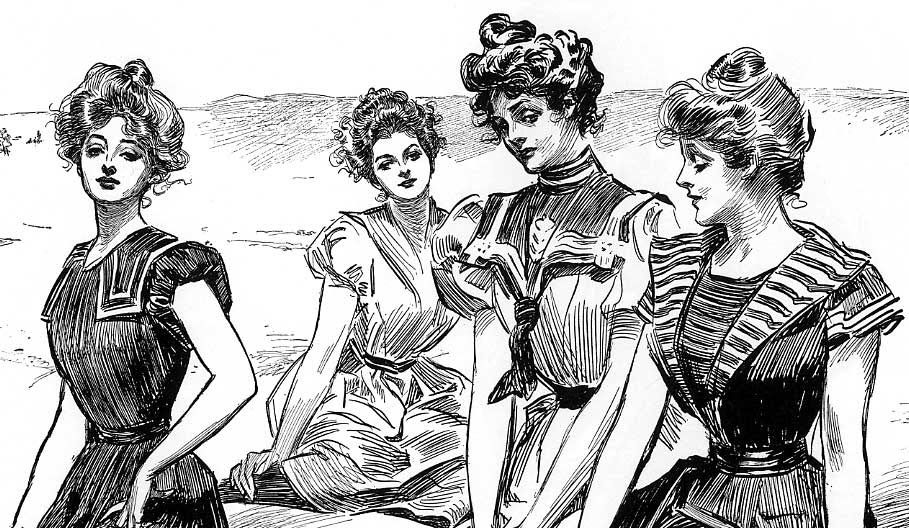
The Edwardian era gets its name from King Edward VII’s brief reign at the beginning of the 20th century. His Danish bride Alexandra was young, lovely, and fashionable, with a taste for trendy pieces rendered in diamonds and pearls.
The jewelry tended toward airy lightness, often in the form of lacy filigree. The world was changing rapidly, but lots of the jewelry still reflected the Victorian ideals of decorum and femininity. Ancient Roman and Greek influences remained popular. “White” jewelry became popular as plentiful deposits of platinum were discovered in Russia and improved smelting technology made it possible for jewelers to work in the noble metal. Platinum was seldom used by jewelers in earlier years owing both to its scarcity and high melting point. The jewelry trade took advantage of its rigid strength to create opulent openwork settings for increasingly brilliant diamonds. The old European cut was perfected, rounder and squatter than old mine. This took stone-cutting one step closer to the mathematically perfect round brilliant cut, which is the most popular diamond cut today. The now-iconic square Asscher cut was patented in 1902. Hot on the heels of platinum, the alloy mixture that produces white gold was formulated and patented in 1915 in New York City. With Europe in the grip of WW1, the American jewelry industry was poised to become a world leader and innovator.
please note:Terms of Sale
Antiques can be returned unworn and in original condition within 10 days of delivery for an exchange or refund minus the cost of shipping. Once a piece has been altered, including ring re-sizing, it is FINAL SALE.

RelatedHistory Lesson
It’s hard to pinpoint when modern-day lockets were invented, but it’s believed that they evolved from ancient amulets.


